Biology

Fowldyr Form
Fowldyr are mythical creatures in Tyrth that take the form of ungulates (usually deer) and have the ability to transform into a humanoid form at will. In their fowldyr form (also known as their true form) all fowldyr share the following characteristics:
- Winged Ears
- At least 1 horn (but 2 horns is most common)
- At least 4 weight-bearing legs
- Cloven hooves
- Dewclaws
- Long tails that end in a visual tuft
While fowldyr are often winged and capable of flight, this is not a mandatory trait of the species.
Human Form
All fowldyr have the ability to shift into a form that is humanoid in appearance. This form resembles a human but has some distinct traits that are always present.
- Winged Ears
- Horns that match their fowldyr form (but are often smaller in size)
- 2 Legs
- Cloven hooves instead of feet
- Dewclaws
- Long tails that end in a visual tuft
The pelt from their fowldyr form appears on their human form in a range of coverage. Fowldyr differ from humans in that they can have any skin colour - even colours like blue, purple, grey etc.
Archetypes
Fowldyr are categorized into three archetypes. The criteria for each archetype is different, and each architype has unique traits.
Common
This is the median form that fowldyr take when taking on their human appearance. Most fowldyr will take this form unless there are factors that prevent it.
A common fowldyr in their human form retains their ear wings, horns, tails, and eye colour, but otherwise appears to be human. They have round pupils and white teeth like a regular human, but their skin colour has a much wider range than humans.
Cursed
Cursed fowldyr are identified by their dark sclera and slit pupils.
The curse often causes anomalies in a fowldyr's appearance and anatomy. This affliction can take many different forms; such as limbs permanently stained with ash, bloodsoaked hands that never wipe clean, and even skeletal appendages.
Fowldyr with a cursed form are either born from a cursed vessel, or their vessel had a curse placed on it at some point in their lives. Whenever a cursed fowldyr absorbs energy, some of that energy is lost to the curse. This is known as the toll of the curse. Because of the way the curse saps energy from a cursed fowldyr, their vessels can never truly be full of mana.
???
No specimens exist yet.
Core Materials
A fowldyr's core material is the material that their vessel is made out of. The core material is what a fowldyr's tether is attached to. The core material dictates what colour the fowldyr's eyes, horns, and hooves will be. For more information on core materials and tethers, check out the Vessels page.
Eyes
A fowldyr's iris is always the same colour as their core material. If the core material is gold, the iris will be gold. If the core material is jade, the iris will be green. The easiest way to see which archetype a fowldyr falls into is by looking at their eyes. The shape of a fowldyr's pupil is a sure-fire way to tell which kind of fowldyr you are looking at.

Common
Common form fowldyr always have round pupils with white sclera.

Cursed
Cursed form fowldyr always have slit shaped pupils and dark sclera. The slit pupil can either be vertical or horizontal.

???
███████ form fowldyr always have ████ shaped pupils.
Ear Wings
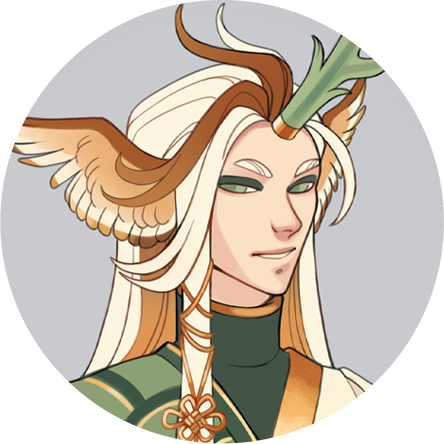
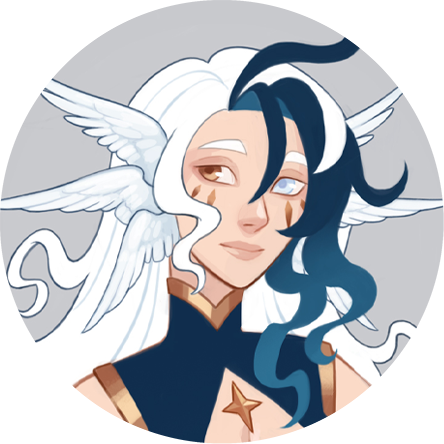
Ear wings must be the same colour in both their humanoid form and fowldyr form. The patterns on the ear wings must also match. Fowldyr have a minimum of two ear wings (unless they lost them due to damage) and a standard ear wing is feathered.
Standard
A typical fowldyr has 2 feathered ear wings.
Seraphic
Fowldyr with multiple sets of ear wings have the seraphic trait.

Dermacore
A fowldyr's ear wings can be made of their core material. These are called dermacore ear wings.

Draconic
A fowldyr's feathered ear wing can have a leathery membrane attached.
Hair Colour
A fowldyr's hair colour in their humanoid form is dictated by their ear wings. Essentially, a fowldyr cannot have a hair colour in their humanoid form that isn't represented somewhere on their ear wings.
The exception to this would be in the case of dermacore ear wings. In these cases, the colour of the hair must be a colour that is present somewhere on the pelt/body.
Prosthetics
Damage to a fowldyr's vessel is reflected in their bodies. Because of this you can see chips, cracks, and even missing limbs on fowldyr who have damaged vessels. However, fowldyr are able to use prosthetics that function just as well as real flesh and blood limbs. As long as the prosthetic is made of the same material as a fowldyr's core material they will be able to fully control it. In a way, a fowldyr's core material functions somewhat like a blood type. The material that the prosthetic is made out of must be sourced from something other than the fowldyr's vessel. A fowldyr cannot use the material in their vessel to create a prosthetic for themselves.
Mouths
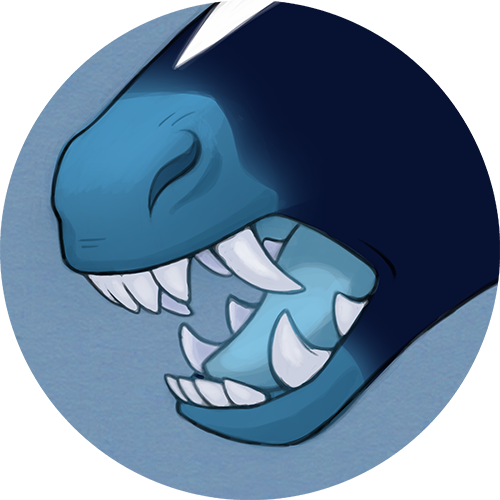
While fowldyr are ungulates, their teeth most closely resemble the order of carnivora. They have large canines that appear in both their fowldyr form and human form.
Standard Mouth
A typical fowldyr will have white teeth and a rounded tongue. The tongue and gums can come in a wide range of colours!
Draconic Tongue
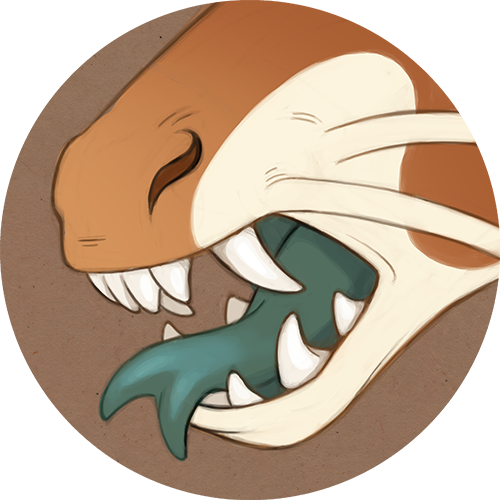
Some fowldyr deviate from the norm by having a forked tongue known as a draconic tongue. This trait is commonly seen in fowldyr with scales on their body.
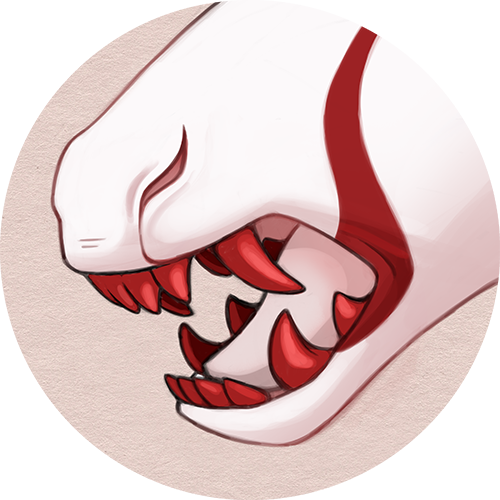
Core Fangs
Some fowldyr have fangs that are the colour of their core material - known as core fangs. If a fowldyr has this trait it will appear in both of their forms. This trait can only manifest in cursed fowldyr, but it is not mandatory for cursed fowldyr designs.
Hooves and Dewclaws
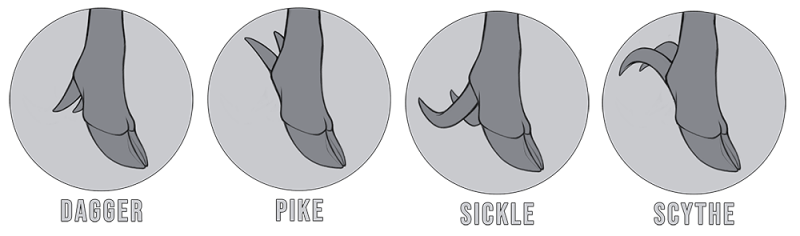
All fowldyr have cloven hooves with 2 dewclaws. Their dewclaws come in a variety of shapes and lengths. Each dewclaw style is named after a different kind of weapon.
Reproduction
Since fowldyr are born from spiritual energy, they do not reproduce sexually. They do not have parents or offspring. They do have genitalia, but it's purely superficial to imitate humans and isn't used for reproduction. In rare events a fowldyr may have siblings - such as a split happening when a fowldyr is spawned, effectively manifesting two fowldyr connected to a single vessel rather than one. In this case, fowldyr who share the same vessel would be considered twins.
Diseases
There is a disease unique to fowldyr that is known as an unstable core. It is thought that misuse of magic may be responsible. An unstable core can affect a fowldyr's ability to manifest their appearance, causing strange anomalies with their core material every time they shift from their fowldyr form to their common form. Learn more about this disease on the Unstable Core page.
Aging
Fowldyr are effectively immortal and generally do not age like mortals do. They can live for hundreds if not thousands of years if their vessels are well cared for. If their vessel sustains a bit of weathering or damage that might be reflected in the fowldyr's appearance.
Similar to how humans will refer to individuals of certain age groups as kids, teens, or adults... fowldyr have a similar naming convention for their age groups:
| 0 - 100 years old | Fawn |
| 100 - 1000 years old | Velvet/Velvetine |
| 1000 - 5000 years old | Coronet |
| 5000+ | Grandtine |
Fowldyr cannot be older than 10,000 years old. This is not the age limit for fowldyr lifespans, but fowldyr must be younger than this in order to canonically fit into the history of Tyrth's world events.
Death
A fowldyr is effectively immortal as long as its vessel exists and remains relatively intact. However, if a fowldyr vessel sustains major damage (such as a vase shattering), the tether will snap and the fowldyr will lose their connection to their vessel. This will not kill the fowldyr outright, but will end its immortality. In this state they can be killed in any way that a mortal can be killed. Additionally, without a vessel, the fowldyr will be cut off from their Major Arcana and Minor Arcana, but they will still be able to use their Primal Arcana. Check out the Arcana page for more information on the different types of magic.
Additional Information
A fowldyr knows the moment its vessel is broken, and can feel the tether break no matter how far away they are at the moment it happens. However, while a fowldyr will feel it's vessel break, if they weren't present when it's vessel was broken then they won't gain any knowledge about how it broke or who is responsible.
Create Your Own Website With Webador