Art History
AN ART HISTORY TOUR THROUGH THE LENS OF FOWLDYR
The Kiss
The Kiss is a famous painting by Gustav Klimt. The painting is adorned with gold, silver, and platinum leaf and scholars consider it to be a part of Klimt's "Golden Period". It is considered to be one of the most recognizable paintings in art history, and it is thought to be Klimt's most important work.
There is a lot to interpret in this painting - the intimate posing, the way the characters are framed in a divine golden light, the vines that wrap around the woman's legs. In Klimt’s painting they are tangled in a beautiful flowerbed but their intimate embrace is precariously posed on the edge of an abyss. The Kiss is a tender moment captured between two characters but also has a foreboding air in its details.
Stasanie reimagined The Kiss with the fowldyr lovers Solace and Adora. The golden light of this recreation captures both Solace's golden core and the golden city of Ambria, while the pink flowerbed captures Adora's gentle nature and the natural beauty of the Rosewood forest that surrounds the city. Their story is one that holds both love and sorrow, and the famous Klimt painting was a perfect setting for the two of them.

The Kiss by Gustav Klimt (1907–1908)

Artwork by Stasanie
Fowldyr Featured: Solace & Adora
Fowldyr Owners: Stasanie & Rose
Coffret (Minnekästchen)
Coffrets were very popular storage containers for valuables in medieval times, and were an important way for medieval merchants to transport precious goods while keeping them safe and protected.
This decorative coffret by an unknown German artist depicts the German goddess of love known as Frau Minne. The goddess is posed with an arrow nocked in her bow and aimed at the heart of a young man. There are inscriptions on the coffret that can be interpreted as: "Gracious lady, I have surrendered," and "Lady send me solace, my heart has been wounded."
Here, Adora takes on the role of the goddess of love, her bow carefully aimed at Solace who will fall in love with her.

Minnekästchen (1325 – 1350)

Artwork by Gamchawizzy
Fowldyr Featured: Adora & Solace
Fowldyr Owner: Rose & Stasanie
Stańczyk
Stańczyk is a painting by the Polish artist Jan Matejko. This painting depicts the renowned jester Stańczyk looking isolated and forlorn while a lively ball is taking place in the background. This painting is thought to be a metaphor for the political standing of Poland in the 19th century. The jester depicted in the painting is Stańczyk, an eloquent and witty man who served as the court jester at the height of Poland's political and economic power during the era of the Renaissance.
This famous painting has been reimagined by the artist Rionull and features Gwynvis - the court jester of the city of Ambria. The city of Ambria is considered one of the wealthiest and most powerful cities in Tyrth, which mirrors the festivities shown in the background of the original painting. The role of Stańczyk is taken on by Gwynvis - a long-lived fowldyr who is usually seen causing chaos and cracking jokes, but suggests that there is much more to Gwynvis than meets the eye.

Stańczyk by Jan Matejko (1862)

Artwork by Rionull
Fowldyr Featured: Gwynvis
Fowldyr Owner: Rockerfly
The Vision of Saint Hubert
This religious folktale has been painted several times throughout history by many talented artists, but Franz von Stuck's version stands out among the rest for its eerie ambiance. While other paintings of this moment are bright forest settings that primarily focus on Hubert, the future Saint isn't depicted here at all. Instead, the artist chose to place this pivotal moment in a forest bathed in darkness. The only shapes you can distinguish are the trees that cut through the foggy horizon, and an ominous stag in the foreground that carries a glowing crucifix in its antlers.
According to legend, this encounter takes place during a hunt on Good Friday and it captures the moment that the hunter Hubert encountered the stag. Upon seeing the creature, Hubert felt a divine calling to lead a life of piety. This vision would be the catalyst that would set Hubert on his path to Sainthood.
This famous scene has been reimagined with Cadmus as the ominous stag carrying a glowing star in their antlers. Even among the fowldyr, Cadmus is quite unusual - bearing skeletal traits and an unsettling appearance. This perfectly mirrors the way the Franz von Stuck painting stands out from other depictions of this scene, the same way Cadmus stands out from other fowldyr.

The Vision of Saint Hubert by Franz von Stuck (1890)

Artwork by SpiritSai
Fowldyr Featured: Cadmus
Fowldyr Owner: Jaestring
Saturn Devouring His Son
Saturn Devouring His Son is a famous painting by Spanish artist Francisco Goya. It belongs to a collection of 14 paintings known as the Black Paintings which Goya painted directly on the walls of his home. These paintings are intense and haunting and seem to reflect the mental state of Goya in the years leading up to his death.
This painting is depicts the Titan of Greek mythology known as Saturn. Saturn learns of a prophecy from Gaea that one of his children will one day usurp him, and the fear of this outcome drives him to devour one of his children.
This artwork was expertly reimagined by SpiritSai, who even included the cracks that you typically see in an oil painting. There is a running joke in the community that the Arbiter favours Gwynvis and even refers to Gwynvis as his son. Both Gwynvis’ owner Rockerfly and The Arbiter’s owner Stasanie thought it would be hilarious to portray their special relationship in one of the most horrifying depictions of father and son in art history.

Saturn Devouring His Son by Francisco Goya (1820 - 1823)

Artwork by SpiritSai
Fowldyr Featured: The Arbiter & Gwynvis
Fowldyr Owners: Stasanie & Rockerfly
Keying Up: The Court Jester
William Merritt Chase was an American painter known for impressionism who excelled in both portraits and landscapes. This early work by William Merritt Chase depicts a court jester pouring himself a little bit of liquid courage before a performance. This painting won a medal in Philadelphia's 1876 Centennial Exhibition.
Helixel mirrored the iconic pose and focused expression of William Merritt Chase's original work, swapping the court jester of the original painting for Gwynvis - the court jester of Ambria. The puppet has been substituted for a plushie of Solace - royal advisor to the Queen of Ambria and Gwynvis' longsuffering coworker.

Keying Up: The Court Jester by William Merritt Chase (1875)
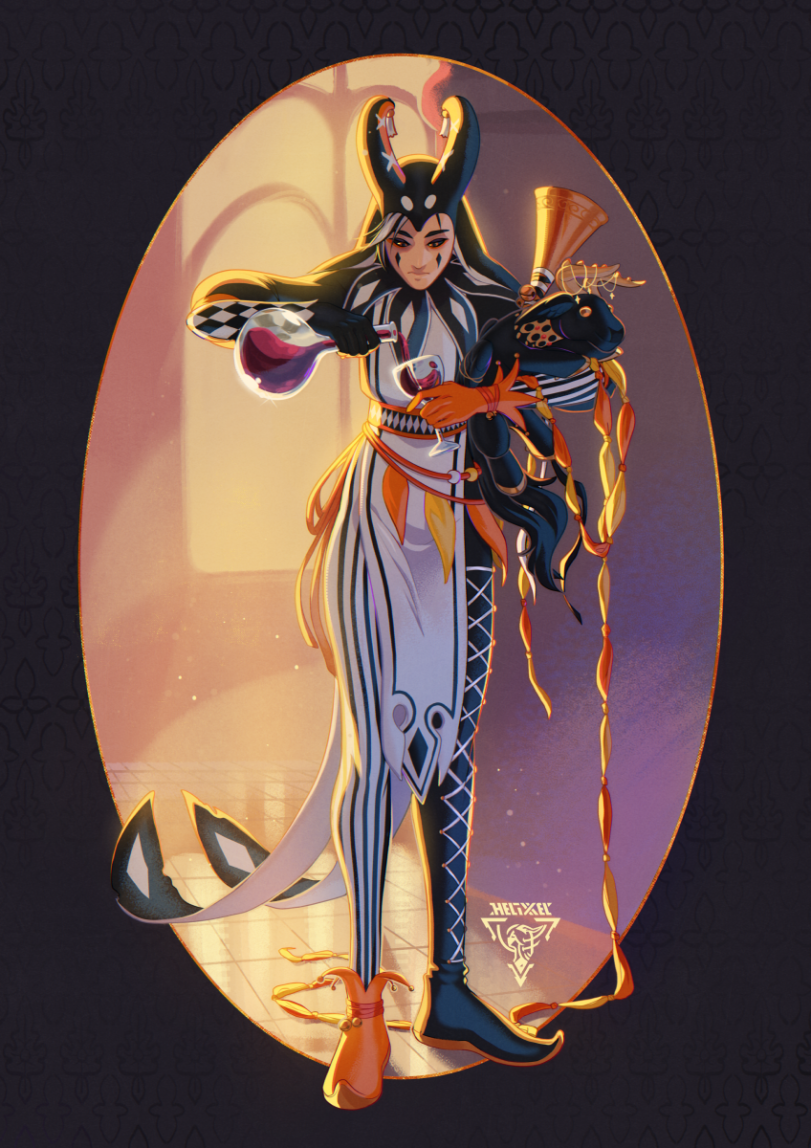
Artwork by Helixel
Fowldyr Featured: Gwynvis
Fowldyr Owner: Rockerfly
Create Your Own Website With Webador